


2022 is right around the corner, and it’s not just time to prepare for Christmas, play video games, buy presents, or share anti-Christmas memes. It’s time to start making some predictions for bare metal Kubernetes! Take a minute and let’s think about it. Developers have advent of code so they’re busy right now. Sysadmins and
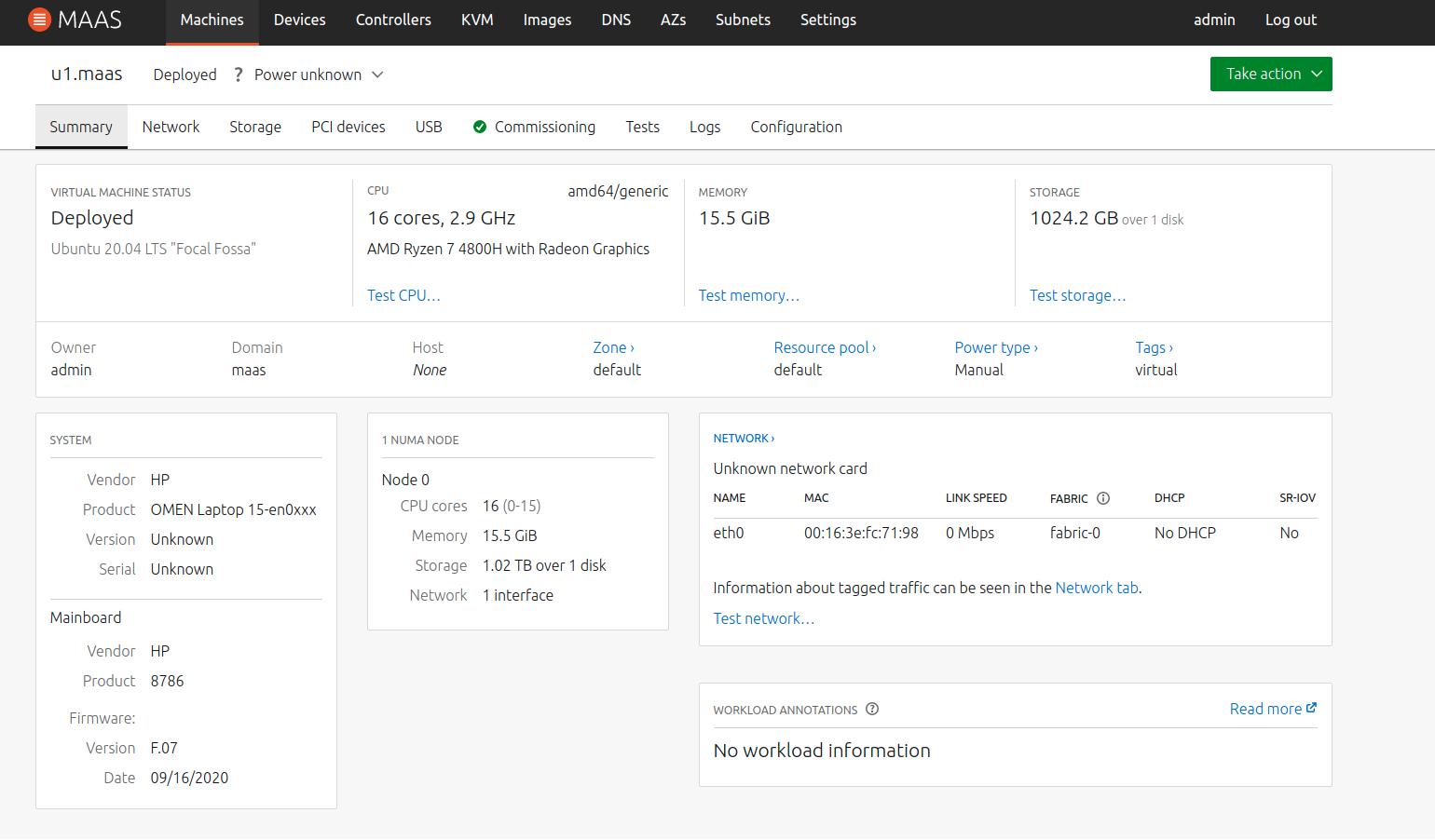
Back a few months ago, we did a feature poll on our MAAS forum, and the most-requested new feature turned out to be “Recommission/rescan a machine after it has been deployed“. With the release of MAAS 3.1, we’ve added that feature, making MAAS an even better choice for linux deployment tools. Here’s a sample of

We are happy to announce that MAAS 3.1 has been released. Bare metal provisioning just got even easier! MAAS 3.1 brings some of the most frequently-requested features into the product. A lot of this is serendipity — or maybe you could say that it’s about like minds tracking the same problem. Either way, we’re doing

Bare metal Kubernetes (K8s) is now easier than ever. Spectro Cloud has recently posted an article about integrating Kubernetes with MAAS (Metal-as-a-Service. In the article, they describe how they have created a provider for the Kubernetes Cluster API for Canonical MAAS (Metal-as-a-Service). This blog describes briefly the benefits of ba

Now that Canonical is prolonging the lifecycle of Ubuntu 14.04 LTS ‘Trusty Tahr’ and 16.04 LTS ‘Xenial Xerus’ to a total of ten years, it’s a good time to reflect on how else Canonical supports these releases for bare metal cloud. Bare metal lifecycle management Whether you’re running a small or a large fleet of

We want to make it possible to deploy MAAS in an existing datacenter, and have it keep track of machines that already have a deployed workload — without disturbing machine or workload. Currently, in order to get a machine into MAAS, with correct hardware information, you have to network boot the machine and let MAAS

With the release of MAAS 3.0, we moved LXD virtual machines out of Beta. Several articles in the MAAS documentation address LXD. Since no document ties all these features together, though, it’s time for a topical blog about LXD. About LXD LXD, pronounced “lex-DEE,” is a container manager, as well as a virtual machine manager.

This blog title should really be, “Why you always, always, always want conflict detection turned on on all the networks MAAS touches,” but that’s really long as a title. But hear me out. As promised, here is another DHCP blog, this time explaining how you can have multiple DHCP servers on the same subnet, serving

Newsletter signup

It’s possible to have more than one DHCP server on the same network and still have everything work right, with no conflicts and no dropped packets or IP requests. It’s really not that hard to pull together, either, but there are some things to know, and some things to consider before we investigate that situation.

We discovered the Diátaxis Framework earlier this year. It’s been on our roadmap to shift MAAS doc to this cool new way of explaining things. This cycle, we plan to make it happen. You’d think it would be obvious…. Diátaxis is one of those ideas. Once you see it, you can’t figure out why everybody

We are happy to announce the release of MAAS 3.0. This release provides some new features and bug fixes. Here’s the tl;dr summary: PCI and USB devices are now modelled in MAAS PCI and USB device tabs are now available in machine details IBM Z DPM partitions are supported for MAAS and virtual machines Proxmox
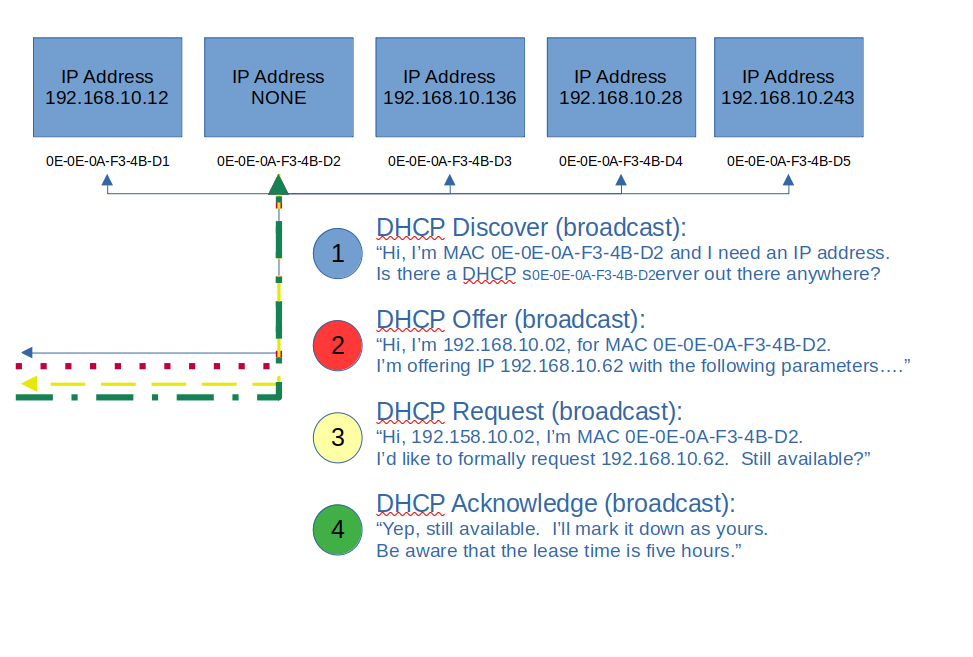
Let’s step back and take a very basic look at DHCP. In fact, let’s look at the analogy of assigning a street address to your house. Usually, this is done by the local 911 dispatch office, or some other central authority. They typically use either a survey map or a latitude, longitude pair to locate
Ubuntu tech blog
Deep dives for developers
Visit the Ubuntu Tech Blog for deep dives into product features, step-by-step tutorials, and the latest updates from Canonical's engineering teams.