


MAAS brings cloud-like automation to physical servers. It helps teams discover, commission, deploy, and repurpose machines from a central control plane, turning bare metal into a programmable resource. But to experience that value, users first need to get MAAS up and running. That path is now cleaner and easier to follow. We’ve created ne

Modern infrastructure teams are expected to deliver cloud-like speed, consistency, and reliability, even when their workloads run on physical servers. Bare metal remains essential for many environments: private clouds, Kubernetes clusters, AI infrastructure, edge sites, regulated platforms, and large Ubuntu estates. But operating physical

A platform is an environment that allows software to run smoothly across the infrastructure, runtime, and application layers. The key word there is “smoothly”: a good platform connects those layers so well that you don’t notice it. That’s what Ubuntu Server has become: the essential layer between bare metal and the apps running on top,

Most modern datacenters are inherently heterogeneous. VMware environments coexist with container platforms, databases, and other bare-metal workloads, often on the same hardware over several years. Servers are bought once, but their role changes as requirements evolve. However, ESXi (the VMware hypervisor) provisioning is often handled se

As AI platforms grow into large-scale “AI Factories,” the real bottleneck shifts from model design to operational complexity. With expensive GPU accelerators, hardware failures and inconsistent configurations lead directly to lost throughput and reduced return on investment. While Kubernetes orchestrates workloads, it cannot fix broken ph
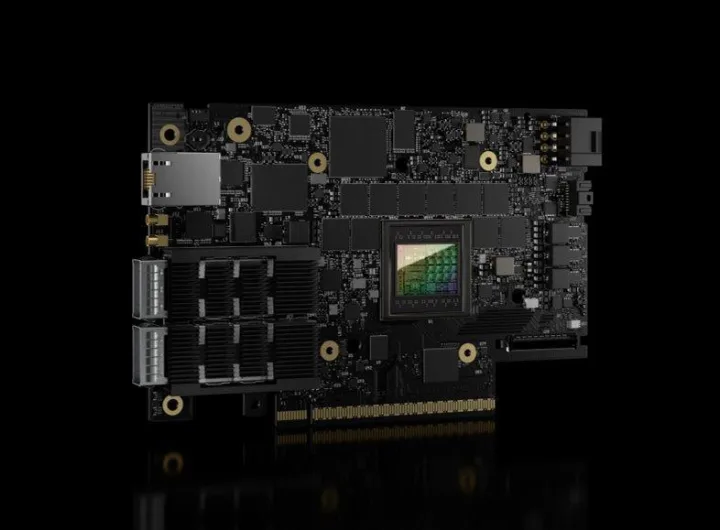
The recent release of MAAS 3.7 introduces a significant new capability: the ability to provision NVIDIA BlueField Data Processing Units (DPUs) directly through their Baseboard Management Controller (BMC),

Canonical’s MAAS User Interface has been ranked as the top-quality software project in its category by the quarterly TIOBE Software Quality Assurance Award

Data centers don’t have to be power-hungry monsters. With smart automation using tools like MAAS, you can reduce energy waste and operational costs, and make your infrastructure greener, without sacrificing performance or flexibility.

Newsletter signup

To truly reduce OpEx, you must shift your perspective from seeing operations as custom, artisanal work to one where operations are standardized, automated, and repeatable. In other words, commoditized.

The rapid growth in OpenStack installation and orchestration tools that we have seen in recent years has effectively established OpenStack as the world’s leading open source cloud platform. Projects like Sunbeam or Kolla Ansible, for example, are effectively transforming OpenStack into yet another user application. By using containers and

It has been several years since Canonical committed to implementing support for NVIDIA smart NICs in our products. Among them, Canonical’s metal-as-a-service (MAAS) enables the management and control of smart NICs on top of bare-metal servers. NVIDIA BlueField smart NICs are very high data rate network interface cards providing advanced s
Canonical is proud to announce that we have joined the Sylva project of Linux Foundation Europe as a General Member. We aim to bring our open source infrastructure solutions to Sylva and contribute to the project’s goal of providing a platform to validate cloud-native telco functions. Sylva was created to accelerate the cloudification of
Ubuntu tech blog
Deep dives for developers
Visit the Ubuntu Tech Blog for deep dives into product features, step-by-step tutorials, and the latest updates from Canonical's engineering teams.