

Canonical announced it is a launch partner for the AWS European Sovereign Cloud, with Ubuntu and Ubuntu Pro now available. This new independent cloud for Europe enables organizations to run secure, enterprise workloads with full operational autonomy and EU data residency. By combining the performance and expanded security coverage of Ubun

DORA requires organizations to know what they run, where it came from, and how it’s maintained. Learn how to build infrastructure with verifiable provenance.

In this article we walk through the steps required to deploy a Spring Boot application to production using Juju and Kubernetes. The goal is to showcase the integration of the application with essential services like PostgreSQL for database management and Traefik for ingress control.

The security landscape is growing continually in complexity. Whatever industry you work in, your organization has to contend with evolving threats and ever-stricter compliance requirements, whilst at the same time facing pressure to build fast and scale smart. This is especially true when innovating on the public cloud.

When we announced that the Ubuntu Summit 25.10 would be a remote event, we knew we were taking a big step. We asked ourselves: how can we capture the spirit of an in-person community event and convey its energy through a screen? How can we connect the circle of friends from all over the world?

Official Ubuntu support for the NVIDIA Rubin platform, including the NVIDIA Vera Rubin NVL72 rack-scale systems, announced at CES 2026 CES 2026, Las Vegas. – Canonical, the publisher of Ubuntu, is pleased to announce official support for the NVIDIA Rubin platform and the latest distributions of the new NVIDIA Nemotron 3 open models. As A

This year, the Canonical team will be at Booth #10562 in the North Hall, we will be demonstrating how Ubuntu Core, Ubuntu Pro for Devices, and our partner ecosystem help you accelerate development, ensure reliability, and simplify the lifecycle of your connected fleets.
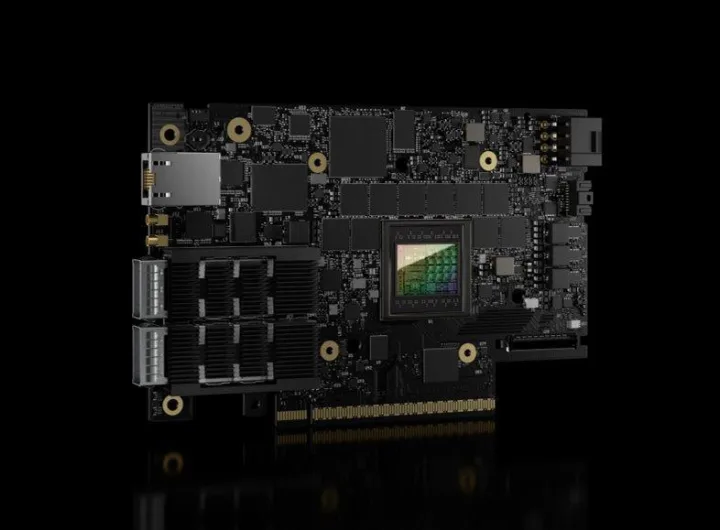
The recent release of MAAS 3.7 introduces a significant new capability: the ability to provision NVIDIA BlueField Data Processing Units (DPUs) directly through their Baseboard Management Controller (BMC),

Newsletter signup

Recently, the team at MinIO moved the open source project into maintenance mode and will no longer accept any changes. That means that no new features or enhancements will be added to MinIO, and existing issues — according to the update — will not be actively considered. Whilst MinIO brought a solid developer-friendly approach to

Canonical has now extended its ESM (Expanded Security Maintenance) for ROS coverage to ROS Noetic content-sharing snaps. With ESM for ROS now available in both deb and snap formats, Ubuntu continues to be the trusted foundation for secure, long-term robotics innovation.

Native integration available between Canonical LXD and HPE Alletra MP B10000. The integration combines efficient open source virtualization with high performance, enterprise-grade storage

Fulfilling your Microsoft Azure Consumption Commitment (MACC) requires efficient planning. Discover how allocating your MACC to Ubuntu Pro allows you to meet consumption goals while securing your open source supply chain and automating compliance.

Setting up a local Deep Learning environment can be a headache. Between managing CUDA drivers, resolving Python library conflicts, and ensuring you have enough GPU power, you often spend more time configuring than coding. Google Cloud and Canonical work together to solve this with Deep Learning VM Images, which use Ubuntu Accelerator Opti

Telecommunications networks are undergoing a cloud-native revolution. 5G promises ultra-fast connectivity and real-time services, but achieving those benefits requires an infrastructure that is agile, low-latency, and highly reliable. Kubernetes has emerged as a cornerstone for telecom operators to meet 5G demands. In 2025, Canonical Kube

At Canonical, time is fixed. Ubuntu releases never slip because we run on a strict rhythm: six-month cycles, two-week pulses, and in-person sprints. Every change is deliberate, ensuring stability without losing agility. This discipline is what enables us to provide 15 years of Long-Term Support. Reliability is built into everything we do.

Canonical is pleased to announce an expanded collaboration with AMD to package and maintain AMD ROCm™ software directly in Ubuntu. AMD ROCm is an open software ecosystem to enable hardware-accelerated AI/ML and HPC workloads on AMD Instinct™ and AMD Radeon™ GPUs, simplifying the deployment of AI infrastructure with long term support from
Ubuntu tech blog
Deep dives for developers
Visit the Ubuntu Tech Blog for deep dives into product features, step-by-step tutorials, and the latest updates from Canonical's engineering teams.